
Construction Crews Start Without Site Delays
Lot Clearing in Lake Wales for properties that must meet county requirements before building permits are issued
New construction and real estate development in Central Florida require cleared lots that meet county specifications for vegetation removal, drainage grading, and boundary verification before contractors can break ground. Americas Finest Land Clearing LLC prepares lots in Lake Wales by coordinating with surveyors to establish exact property boundaries, clearing diverse vegetation that includes palmetto understory and mature hardwoods, and grading the site to manage stormwater drainage that becomes critical during Florida's intense wet season. First-time landowners often discover that lot clearing involves more than removing trees—it requires understanding how sandy soil, drainage codes, and construction access interact to create a truly build-ready site.
The work begins with boundary verification using surveyor stakes, followed by vegetation assessment to determine which clearing methods suit the specific mix of palms, oaks, and understory brush. Drainage grading capability matters because Central Florida's frequent heavy rains can turn an improperly graded lot into a temporary pond, which delays construction schedules and creates erosion issues that require expensive remediation.
Arrange a lot assessment to review county requirements and map the clearing sequence for your construction timeline.
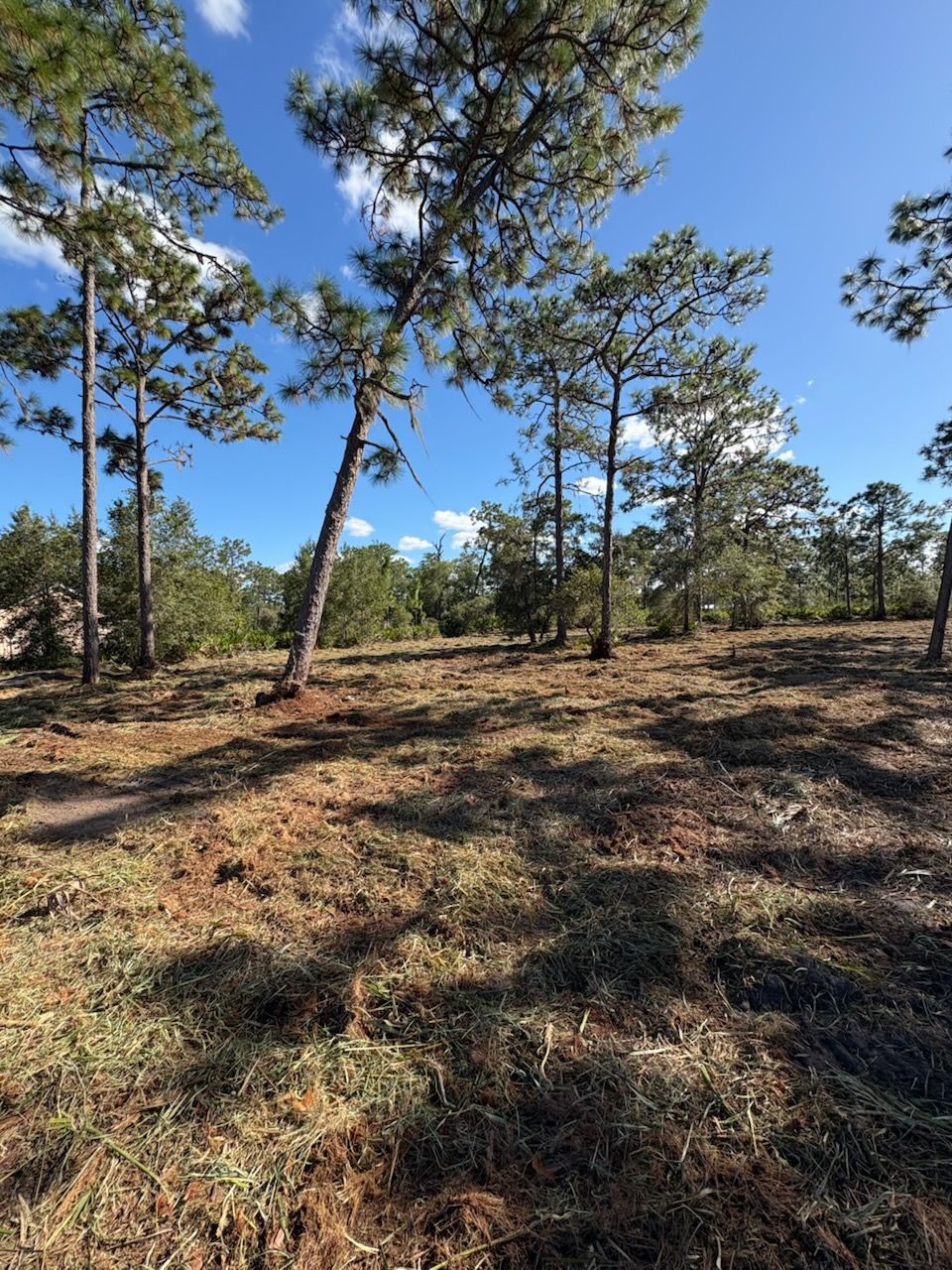
How Lot Preparation Addresses Construction Readiness
Preparing a lot for construction involves verifying property boundaries with surveyor coordination to prevent encroachment issues, removing all vegetation down to the root systems that would interfere with foundation work, and establishing drainage grades that direct water flow according to county stormwater management codes. Thorough planning includes identifying underground utilities before equipment enters the site and staging debris piles where they won't block construction vehicle access once clearing is complete.
Once the lot is cleared, contractors arrive to find stakes marking property corners still visible and intact, a graded surface with no stumps or root masses that would interfere with digging, and drainage slopes that prevent water from pooling in areas designated for structures or driveways. The surface is compacted enough that construction vehicles don't create deep ruts that later require additional fill and regrading.
Extra safety measures built into the process include daily equipment inspections, rigging protocols for any trees near property lines where neighboring structures could be affected, and real-time adjustments when unexpected site conditions appear during clearing. Real estate development projects benefit from this approach because it prevents the surprise delays that occur when lot preparation is rushed and boundary or drainage issues surface only after contractors mobilize.
Answers to Frequent Service Questions
Lot preparation raises specific questions about coordination, county compliance, and the sequence of work that determines when construction can actually begin.
What coordination with surveyors is necessary before clearing starts?
Surveyors place boundary stakes that mark exact property lines, and clearing must preserve these markers while removing vegetation—working around stakes rather than removing and replacing them prevents boundary disputes and ensures the cleared area matches legal property dimensions.
How does drainage grading work on sandy Lake Wales soil?
Sandy soil drains quickly but also erodes easily, so grading creates gentle slopes that move water toward designated drainage areas without creating channels that wash out during heavy rain—the goal is a surface that sheds water without losing soil mass.
When should lot clearing be scheduled relative to construction start dates?
Clearing typically happens two to four weeks before construction begins, which allows time for final inspections and any required adjustments while preventing the regrowth of vegetation that occurs quickly in Florida's climate if too much time passes between clearing and building.
What does construction-ready actually mean for a cleared lot?
Construction-ready means no vegetation or root systems remain in building areas, the surface is graded to county drainage specifications, property boundaries are clearly marked and verified, and the site is accessible for heavy equipment without additional preparation work.
How is debris removal coordinated with the clearing timeline?
Debris can be hauled as clearing progresses or stockpiled for removal after all vegetation is down—the choice depends on site access, whether construction crews need immediate entry, and whether you want continuous hauling or a single debris removal phase at the end.
Americas Finest Land Clearing LLC builds lot preparation plans around your construction schedule and county requirements, taking the extra steps necessary to ensure contractors can start work immediately after clearing is inspected and approved. Request a consultation to review your property's specific boundary and drainage considerations.